Oman Tourist Visa Complete Guide To Apply & Travel 2026
Thinking about a trip to Oman? Good choice. Empty deserts, blue coastlines, and mountain villages that barely make it onto anyone’s radar. But before you book that flight, you need to sort out your visa.
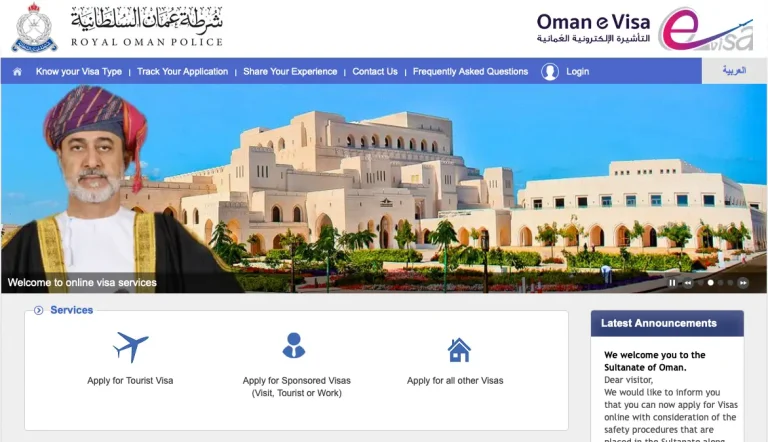
Quick Answer: Most travelers can get an Oman tourist visa online through the official Royal Oman Police (ROP) eVisa portal at evisa.rop.gov.om. Depending on your nationality, you may also qualify for visa free entry for up to 14 days, or a visa on arrival. Fees typically range from around OMR 20 (about $52) for a 10-day or 30 day single entry visa to OMR 50 (about $130) for a one year multiple entry visa.
In this guide, you’ll learn exactly which visa type applies to you, what documents you need, how much it costs, how long it takes, and the common mistakes that get applications rejected. Let’s get into it.
Do You Even Need a Visa to Visit Oman?
Not everyone does. Oman has steadily expanded its visa free and visa on arrival list over the past few years, and 2026 brings a few more additions. GCC nationals (Saudi Arabia, UAE, Kuwait, Bahrain, Qatar) can enter Oman without a visa at all, using only their national ID card. No passport or advance registration needed. Beyond that, citizens of the EU, EEA, USA, UK, and Canada can typically enter Oman visa free for stays of up to 14 days, provided the trip is for tourism. Several other nationalities, including the Philippines and Armenia, were added to Oman’s visa free or visa on arrival list during 2026.
Did You Know? Oman’s visa free list is one of the more generous in the Gulf region, partly because tourism is a growing pillar of the country’s economic diversification plan away from oil.
If your country isn’t on the visa free list, you’ll need to apply for an eVisa before you travel. There’s no way around this — Oman does not offer walk up visas at the airport for most nationalities anymore.
How to Check If You Need a Visa
Important Note: Even if you’re visa-free, immigration officers at the border can still ask for proof of onward travel, accommodation booking, and sufficient funds. Visa-free doesn’t mean requirement-free.
Types of Oman Tourist Visas
The Royal Oman Police issues a few different unsponsored tourist eVisa categories. Picking the right one depends on how long you plan to stay and whether you’ll be entering more than once.
| Visa Type | Duration | Entry | Typical Fee |
|---|---|---|---|
| 10-Day Tourist eVisa | 10 days | Single entry | OMR 20 (~$52) |
| 30-Day Tourist eVisa | 30 days | Single entry | OMR 20 (~$52) |
| 1 Year Multiple Entry Tourist eVisa | 30 days per visit, valid 1 year | Multiple entry | OMR 50 (~$130) |
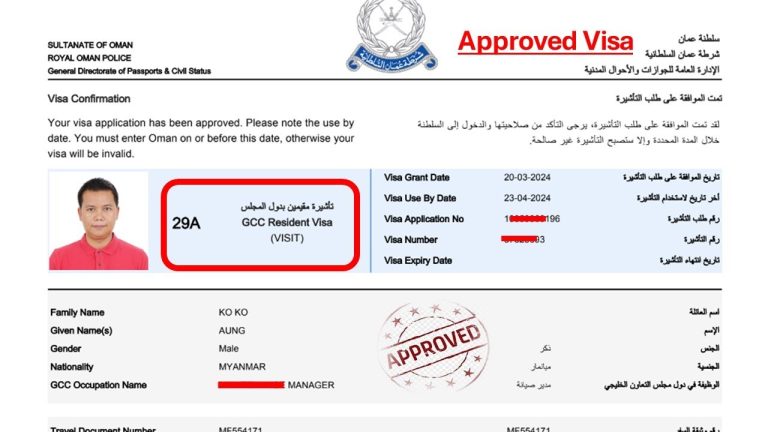
| GCC Resident eVisa | Varies | Single/multiple | Varies |
Quick Tip: If you’re planning to hop between Oman and the UAE more than once during your trip a common route for travelers exploring both countries the 1-year multiple-entry visa often works out cheaper and far more convenient than applying twice.Fees can change, and processing options like express service add extra cost, so always confirm current pricing on the official portal before paying.
GCC Resident eVisa
If you’re a resident (not a citizen) of a GCC country and work in an approved profession, you may qualify for a special GCC resident eVisa. This route usually requires uploading your GCC residence card as part of the application, and it’s popular with expats based in Dubai, Abu Dhabi, Riyadh, or Doha who want a quick weekend trip to Oman.
Who Is Eligible for the Oman eVisa?
Eligibility depends heavily on nationality, and Oman groups applicants roughly into two categories.
Group 1 includes nationalities that can apply for the eVisa with no extra conditions attached you just need a valid passport and the standard documents.
Group 2 includes nationalities such as India, Egypt, Jordan, Morocco, and Vietnam, which qualify only under extra conditions. Typically, this means the traveler must hold a valid visa or residence permit for the US, UK, Canada, Australia, Japan, or a Schengen country, or be a GCC resident working in an approved profession. This group also covers countries like Algeria, Azerbaijan, Bhutan, Costa Rica, Cuba, Kyrgyzstan, Maldives, Mexico, Peru, Tunisia, and several others.
Common Mistake: Applicants from Group 2 countries often submit their eVisa application without uploading proof of their US, UK, Schengen, or other qualifying visa. This is one of the most frequent reasons for rejection. Always attach a clear, valid copy of that supporting visa.
If your nationality doesn’t appear on either the visa-free list or the eligible eVisa list, you’ll need to apply through an Omani embassy or consulate in your home country instead.
Documents You Need to Apply
Before you start the online application, have these ready:
You typically don’t need to upload proof of accommodation, a return ticket, or travel insurance at the application stage — but border officers may ask to see these on arrival, so it’s smart to have them ready anyway, even in digital form on your phone.
Expert Tip: Save your visa approval as both a PDF and a screenshot. Airport Wi-Fi and mobile data aren’t always reliable, and immigration staff will want to see the document, not just hear that you have one.
Step By Step How To Apply For Oman eVisa
Important Note: The visa fee is non-refundable, even if your application is rejected. Double-check your nationality selection, visa type, and every uploaded document before submitting and paying.
How Long Does Processing Take?
Processing is usually instant to three business days, though it can occasionally take longer during peak travel seasons (winter months, especially December through February, when Oman’s mild climate draws the most visitors). Apply at least a week before your trip to avoid last-minute stress.
Oman Visa on Arrival
A small number of nationalities can still get a visa on arrival at Muscat International Airport (MCT) and Salalah Airport (SLL). This isn’t the same as being visa-free you’ll still need to pay a fee and go through an immigration counter, but you don’t need to apply online beforehand.
Pros and Cons of Visa on Arrival
| Pros | Cons |
|---|---|
| No need to plan ahead online | Only available to specific nationalities |
| Convenient for last-minute trips | Longer queues at the airport |
| Straightforward payment at the counter | No guarantee of approval on the spot |
If your nationality is eligible for both the eVisa and visa on arrival, applying online in advance is almost always the smarter move. You avoid airport queues and know your visa status before you even board the flight.
Land Border Crossings: Entering Oman from the UAE
A lot of travelers combine a UAE trip with a stop in Oman, crossing overland rather than flying. The most common route is through the Hatta–Al Wajajah border or the Al Ain–Buraimi crossing.If you already hold a valid Oman eVisa, it works the same way at land borders as it does at airports. Just make sure your visa is approved and printed (or saved as a PDF) before you reach the checkpoint, since Wi-Fi at these borders can be patchy.
Common Mistake: Some travelers assume a UAE visa automatically covers entry into Oman. It doesn’t. The two countries have separate visa systems, even though they’re both part of the GCC.
Visa Extensions
If your trip runs longer than planned, Oman does allow tourist visa extensions but not indefinitely.
Online extension: Log into your evisa.rop.gov.om account, locate your active visa, and apply for an extension before it expires. This usually costs around OMR 20 more.
In person extension: Visit a Royal Oman Police immigration office. Major offices are located in Muscat’s Al Khuwair area, plus Nizwa, Sur, and Salalah. Bring your passport, visa confirmation, proof of accommodation for the extended period, and the extension fee.
Extensions generally bring your maximum stay to around 60 days on a tourist visa. They are not automatic — immigration officers can deny an extension if there’s any history of visa violations or if your passport is close to expiry. For longer stays, you’d need to look into a different visa category entirely, such as a work or residency visa.
How Much Does an Oman Tourist Visa Cost?
Here’s a general breakdown, though you should always confirm current fees on the official portal since pricing can change:
| Item | Approximate Cost |
|---|---|
| 10-day single-entry eVisa | OMR 20 ($52) |
| 30-day single-entry eVisa | OMR 20 ($52) |
| 1-year multiple-entry eVisa | OMR 50 ($130) |
| Visa extension | OMR 20 |
| Express processing (where offered) | Additional fee, varies |
Payments are made online through the ROP portal using a credit or debit card. Fees are non-refundable, so it pays to be careful with your application before you submit it.
Common Mistakes That Get Applications Rejected
Warning: Never share your passport details or payment information with unofficial visa agents contacted through social media or unsolicited emails. Stick to the official ROP portal or well-established, clearly licensed visa service providers.
Read Also:
Checking Your Application Status
You can track your Oman eVisa application directly on the ROP portal:
The same portal also lets you verify the authenticity of an issued visa by entering the visa number and passport details — useful if you’re double-checking a visa arranged through a travel agent.
Frequently Asked Questions
Final Thoughts
Sorting out your Oman tourist visa doesn’t need to be complicated. Check whether your nationality qualifies for visa-free entry first. If not, the ROP eVisa portal is a straightforward, mostly self-service process — as long as your documents are accurate and complete.Apply early, double-check every detail before you pay, and keep a saved copy of your approval handy for the airport or land border. Do that, and the visa becomes the easiest part of planning your trip to Oman.